
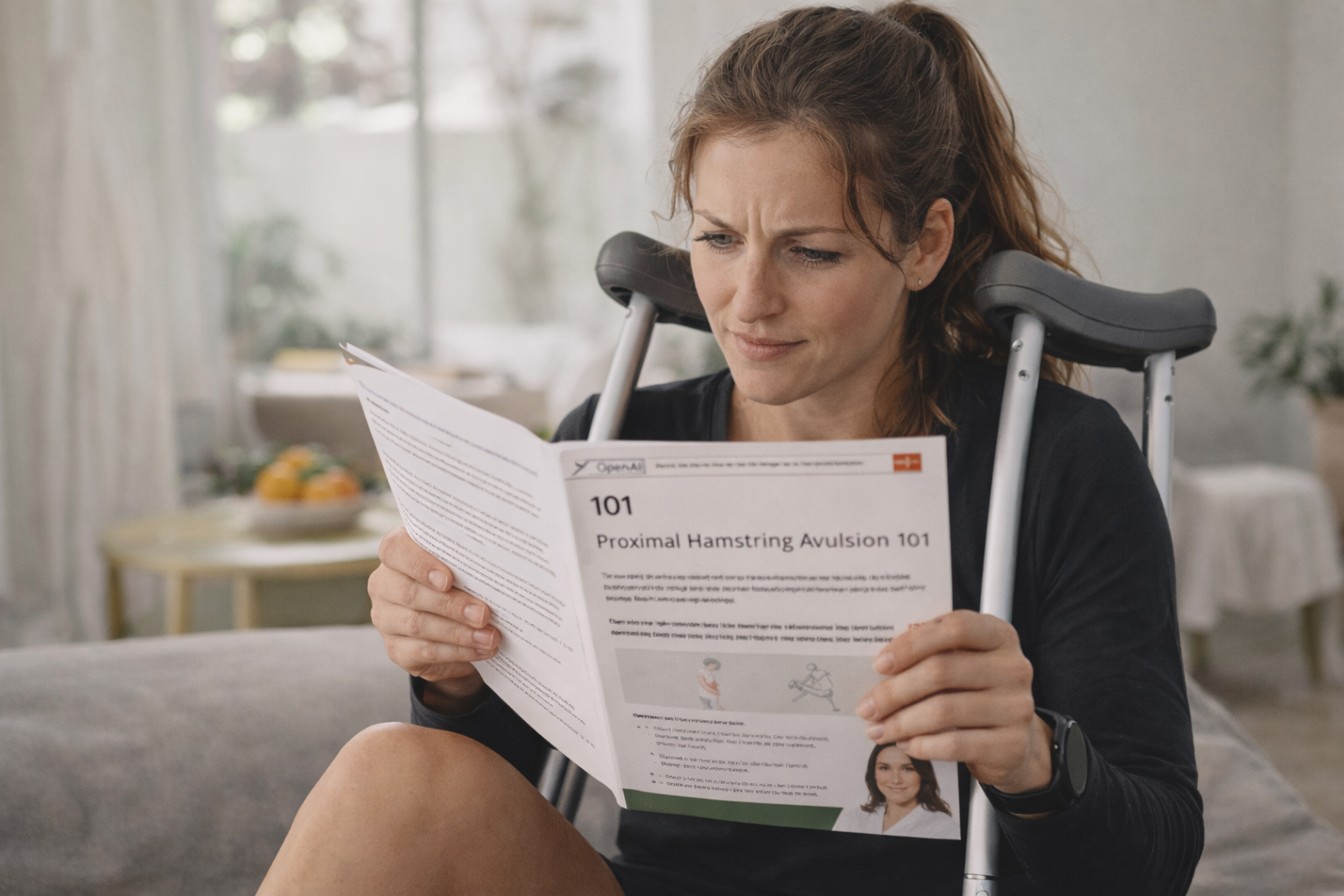
Why and how I write about hamstring ruptures, avulsions, and recovery after surgery
When pain, uncertainty, and big consequences collide, most athletes get chaos, not structure. I see it as my job to provide that structure.
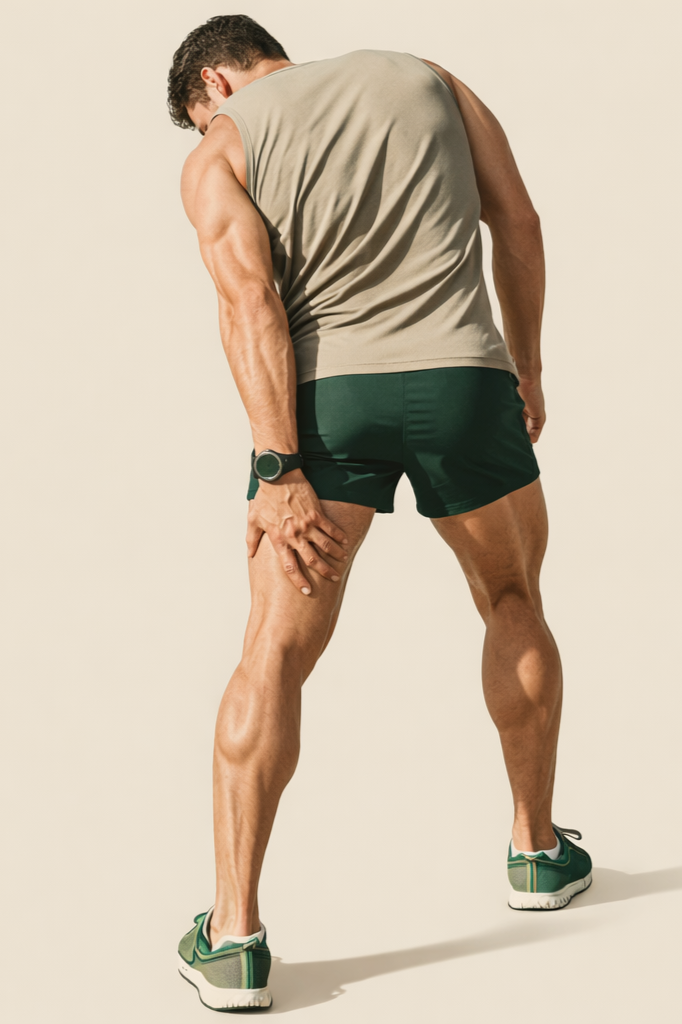
My writing has one core task: translate complex, evolving hamstring research into client‑facing clarity without dumbing it down. I respect my readers’ intelligence. That means:
No salesy promises
No vague “you’ll be fine” platitudes
No impenetrable jargon that only another specialist could decode
I put the effort into keeping up with the science so you don’t have to, and then I explain it in normal language so you can actually use it.
The goal of these articles is simple:
Give athletes and clinicians shared language
Help you arrive at your local clinic with structured questions, not Google panic
Turn consultations into collaborative conversations, not combative “Dr Google vs doctor” debates
Everything I publish is written to align with professional standards and with FTC and privacy expectations: education and decision support, never diagnosis, treatment, or guarantees. Your own medical team always stays in charge of your care.
Each article aims to give a holistic, honest view of proximal hamstring avulsions and ruptures (from decisions to rehab to identity) and, when it makes sense, will point you toward the main research‑based resource I’ve built: the Understanding Proximal Hamstring Avulsion Guide (UPHAG).
UPHAG is my attempt to create the safest, fastest way to inform yourself:
Based on real studies, not generic blog posts and regularly updated as new evidence comes out
Designed to protect you from vague AI answers and non‑specific “hamstring” advice that research has shown can be incomplete or misleading for complex injuries like this (reference)
If these articles do their job, you won’t walk away with a magic answer. You’ll walk away with better questions, clearer language, and a calmer head for the decisions and rehab work that still have to happen with your own team.
I simply believe that serious hamstring injuries live in a grey zone, and athletes deserve structured reasoning, not pressure.

Hamstring Rupture / Avulsion Rehab: How To Use Online Support Communities The Right Way
Online communities can help or harm proximal hamstring rupture / avulsion rehab. Learn how to use hamstring injury support groups to reduce isolation, avoid comparison traps, and support your proximal hamstring avulsion recovery and return to sport.
By Dr. Luise “Loopi” Weinrich www.docloopi.com
Medical Disclaimer
Everything here is education and decision support.

How To Fix a “Stuck at 70%” Proximal Hamstring Rupture Rehab (And What a Solid 24‑Week Plan Looks Like)
Antifragile rehab guide for proximal hamstring rupture / avulsion. Learn how to design long‑term, phase‑based proximal hamstring avulsion rehabilitation and post‑op refixation recovery so your comeback becomes stronger and more durable instead of repeating the same fragile patterns.
By Dr. Luise “Loopi” Weinrich www.docloopi.com
Medical Disclaimer
Everything here is education and decision support.

Proximal Hamstring Rupture / Avulsion Rehab: How To Build An Antifragile Comeback Instead Of Rebuilding Fragility
Antifragile rehab guide for proximal hamstring rupture / avulsion. Learn how to design long‑term, phase‑based proximal hamstring avulsion rehabilitation and post‑op refixation recovery so your comeback becomes stronger and more durable instead of repeating the same fragile patterns.
By Dr. Luise “Loopi” Weinrich www.docloopi.com
Medical Disclaimer
Everything here is education and decision support.

Proximal Hamstring Rupture / Avulsion Rehab: Why Patient Athletes Can Win the Long Game
Proximal hamstring rupture / avulsion rehab guide for serious athletes. Learn how to plan return to sport after proximal hamstring avulsion or refixation surgery using long‑term, phase‑based systems instead of rushing back and risking chronic pain or re‑injury.
By Dr. Luise “Loopi” Weinrich www.docloopi.com
Medical Disclaimer
Everything here is education and decision support.

Why Interdisciplinary Work Matters So Much in Proximal Hamstring Ruptures / Avulsions
You’ve been told, “We fixed the tendon, now physio will take care of the rest,” or “You don’t need surgery, just do rehab,” but in reality your surgeon, physio, and coach are all quietly guessing their way through a rare injury they almost never see. Proximal hamstring ruptures/avulsions are structurally complex and clinically uncommon – most physiotherapists will never see a complete avulsion in their entire career – yet we still expect short, overloaded clinic slots to carry the full weight of diagnosis, rehab planning, and return‑to‑sport decisions.
In this article, I walk through why this particular injury almost always needs an interdisciplinary approach: what surgeons can realistically own, what physios can and cannot be expected to know, and how a hamstring‑focused remote layer can give everyone a shared operating system instead of improvising around a “torn hamstring.”
By Dr. Luise “Loopi” Weinrich www.docloopi.com
Medical Disclaimer
Everything here is education and decision support.

How To Plan Your Return To Sport After A Proximal Hamstring Avulsion / Rupture
Planning your return to sport after a proximal hamstring avulsion or rupture can feel like guesswork, even with a good team. This article explains why the injury is so rare, how to build a realistic rehab and RTS plan with your own clinicians, and when adding hamstring‑specific expertise can help.

The Hamstring Comeback Map: How To See Where You Are And What To Do Next - For athletes with proximal hamstring ruptures/avulsions who feel lost in rehab
You’re leading return‑to‑sport decisions on athletes whose bodies are their careers, yet when a proximal hamstring avulsion walks in, even a strong high‑performance department may only have one or two lifetime cases to draw on. You feel the pressure to “have a plan” while knowing, quietly, that your reps with this specific pattern are low. This article looks at what a realistic RTS pathway for rare hamstring injuries can actually be: how to be honest about experience, how to structure phases and roles, and how to involve focused hamstring expertise without undermining the work of the local team.
By Dr. Luise “Loopi” Weinrich www.docloopi.com
Medical Disclaimer
Everything here is education and decision support.

Recovery Intelligence: The 4 Skills Behind A Smart Hamstring Comeback
You’ve been told you’re “cleared,” you can walk and maybe jog, and everyone around you seems to think the story is over – but you know you’re nowhere near full speed, cutting, or trusting your leg in chaos. The worst part is wondering if this half‑finished feeling is just your new normal. This article shows you why the hardest 20–30% of hamstring recovery almost always happens after discharge, and how to turn that scary gap into a structured performance phase instead of hoping that walking will somehow be enough.
By Dr. Luise “Loopi” Weinrich www.docloopi.com
Medical Disclaimer
Everything here is education and decision support.

When Every Twinge Feels Dangerous: Reinjury Fear After Hamstring Surgery Or Rehabilitation
You’ve been told you’re “healed” or “cleared,” but every twinge still feels like it might blow your hamstring apart again. You keep bouncing between resting to be safe and testing to see if it’s really okay, and nothing feels truly safe anymore. This article explains why that “cleared but scared” phase is a documented part of real hamstring recovery, and shows you how to use graded exposure and small wins to rebuild trust in your leg instead of waiting forever to magically feel fearless.
By Dr. Luise “Loopi” Weinrich www.docloopi.com
Medical Disclaimer
Everything here is education and decision support.

When You No Longer Feel Like An Athlete After A Hamstring Rupture
Your hamstring plan probably looks fine on paper: surgery or rehab chosen, rough timeline in mind, maybe even “cleared” by someone. But a part of you is already wondering, “What if this quietly falls apart and I only realize it 12 months from now?” This article walks you through how to run a premortem on each path—spotting the specific, predictable ways both surgery and conservative rehab can fail—so you can redesign your plan now instead of finding the holes the hard way.
By Dr. Luise “Loopi” Weinrich www.docloopi.com
Medical Disclaimer
Everything here is education and decision support.