

Injured and Isolated After A Hamstring Avulsion?
A free, focused space where people with sports identity and Proximal Hamstring Ruptures or Avulsions get orientation, shared language, and support so they don’t have to guess or go through this chapter alone.
Who This Is For
Serious and competitive athletes with proximal hamstring ruptures or avulsions
Pre‑op, post‑op, on a conservative path, or living with chronic symptoms
Athletes who feel mentally stuck between “surgery vs rehab” and want a clearer map of the options
People who are tired of random forum horror stories and generic hamstring advice that doesn’t match their situation
Athletes who want to understand what’s common vs concerning at different stages, without being talked down to
Those who are not ready for surgery, HSCA, or a paid rehab program yet, but know they need a sane, focused room
This community is NOT relevant for:
People looking for emergency help, diagnosis, prescriptions, or a new primary doctor
Anyone wanting a place to argue with or undermine their own surgeon or physio
Casual or minor hamstring strains where sport is not a central part of life
People who want guaranteed outcomes
What You Get (Components)
-
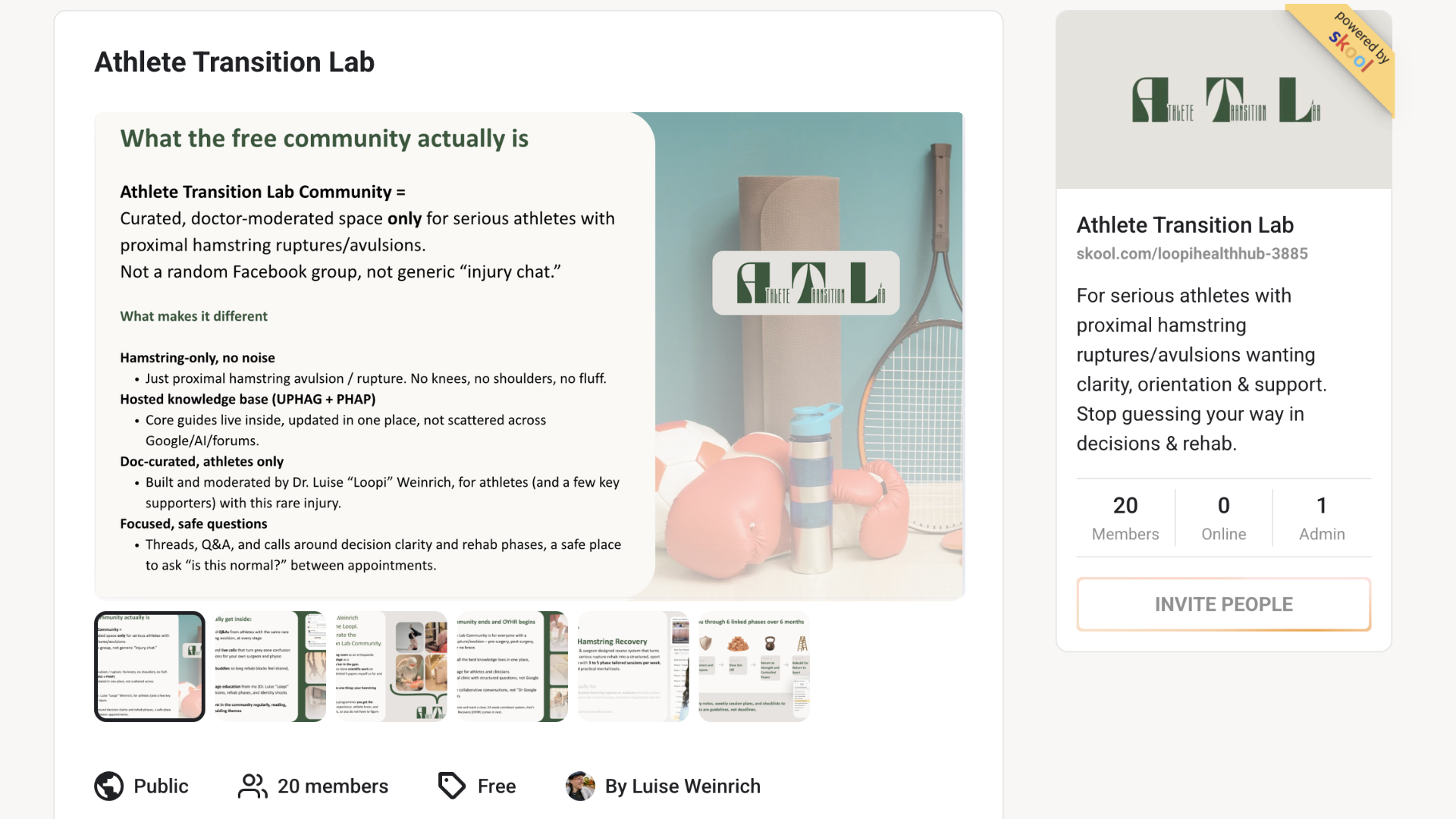
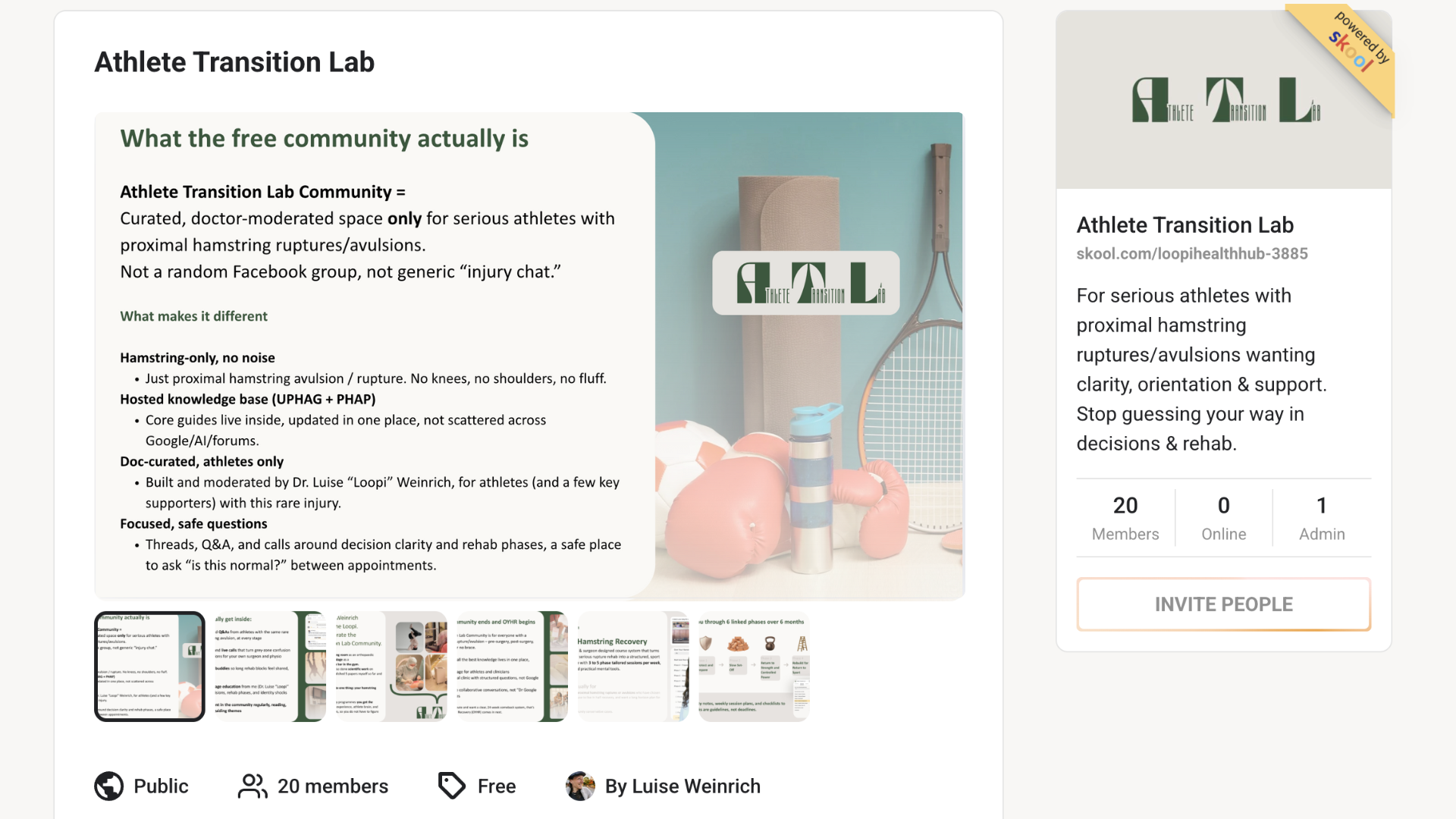
A private online space only for athletes with proximal hamstring ruptures or avulsions
Intro prompts so you can share as much or as little as you want and immediately see others in similar situations
Moderation to keep discussions calm and on‑topic
-
Pinned posts that explain the usual pathways (surgery vs conservative, timing, grey zones) in plain language
Content to help you see where you are on the map without telling you what you personally should do
Links to the free “Understanding Proximal Hamstring Avulsion Injuries” guide
-
Ongoing threads where you can ask about stages, sensations, timelines, and decisions at a general level
See how other athletes describe similar phases, what questions they asked their teams, and what patterns they noticed over time
Always framed as education and experience‑sharing, not prescriptions
-
Space to connect with athletes in similar sports, timelines, or treatment paths
Optional buddy matching so you don’t go through long, boring, or scary blocks of rehab alone
The option to quietly read if you’re not ready to talk yet
-
Live sessions focused on unpacking common questions in a calm way
You can attend live or watch replays when your brain has the capacity
Calls are for understanding patterns and questions to ask locally, not for remote treatment plans
What Makes This Different
Injury‑specific, not generic: Only for proximal hamstring ruptures/avulsions – no noise from unrelated knees, shoulders, or general fitness talk.
Athlete‑first perspective: Built around people who care deeply about performance, identity, and long‑term function, not just “walking without pain.”
Clarity without pressure: No one here will try to push you into surgery, conservative care, or a paid program. The focus is understanding and language, not conversion.
Moderated, not chaotic: Threads and calls are guided so you don’t drown in horror stories, one‑up rehab, or misinformation.
Designed as a first step: Sits before things like HSCA and OYHR so you can arrive at those decisions calmer and more informed if and when you choose.
How It Works
1. Join (free)
Click the join button and answer a few basic questions so we keep the space focused on serious athletes with this specific injury.
2. Read the “Start Here” posts
Get a quick overview of how the community works, what’s safe to share, and how to protect your own privacy.
3. Locate yourself on the map
Use the pinned orientation posts and free guide to see which general phase you’re in – early, mid‑decision, long rehab, chronic coping.
4. Engage at your own pace
Introduce yourself, ask one real question that’s been looping in your head, or just read others’ stories until you feel ready.
5. Use the space alongside local care
Take what you learn back to your surgeon, physio, coach, or therapist as better questions and clearer language – not as a replacement for their care.
Risk Reversal & Boundaries
Does not diagnose, treat, or prescribe
Does not promise specific outcomes, timelines, or return‑to‑sport levels
Does not replace your surgeon, physio, or mental‑health professionals
Does not provide emergency advice – red‑flag symptoms always require urgent in‑person
What this community does NOT do:
Names and normalizes the weird, lonely parts of this injury
Helps you understand the decision landscape and common patterns
Gives you a place to see you’re not the only one living this, and to hear how others navigated similar decisions
Makes it easier to have clearer, calmer conversations with your own team
What it DOES do:
Price & Access
Price: Free
Access: Ongoing, as long as you follow basic community rules (respect, confidentiality, no medical prescriptions, no abuse)
Commitment: You can participate actively or just read quietly. Both are valid. You can leave at any time.
There is no requirement to book Hamstring Surgery Clarity Audit, Own Your Hamstring Recovery, or any paid service. Those exist separately if, later, you want more structured decision support or rehab planning.
Frequently Asked Questions
-
No. The community provides education, peer support, and language for discussions with your own care team. It does not diagnose, treat, or guarantee outcomes and does not replace your local doctors, physios, or therapists.
-
No. You can join, read, and never post if that feels safest. Many people start by just reading others’ experiences until they feel ready to say “this is me too.”
-
We actively discourage that. The goal is to understand options and trade‑offs and help you ask better questions locally, not to give you a verdict from strangers on the internet.
-
We encourage you to keep identifying details vague and focus on patterns rather than specifics. It protects your privacy and keeps the space focused on shared learning, not case analysis.
-
No. Joining the community does not create a doctor‑patient relationship. Dr. Luise’s role here is as an educator and moderator. Your own medical team remains responsible for your care and decisions.