
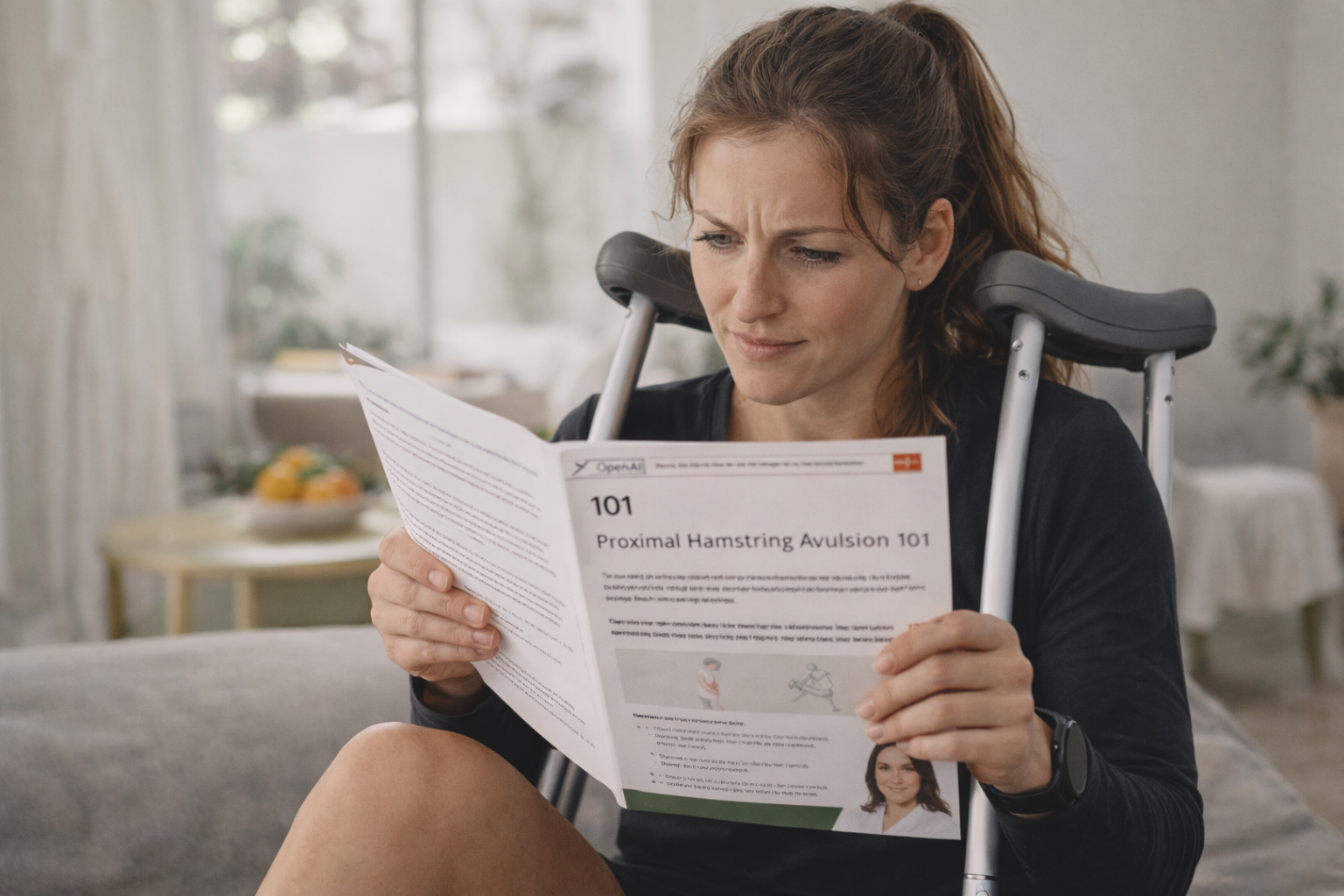
Why and how I write about hamstring ruptures, avulsions, and recovery after surgery
When pain, uncertainty, and big consequences collide, most athletes get chaos, not structure. I see it as my job to provide that structure.
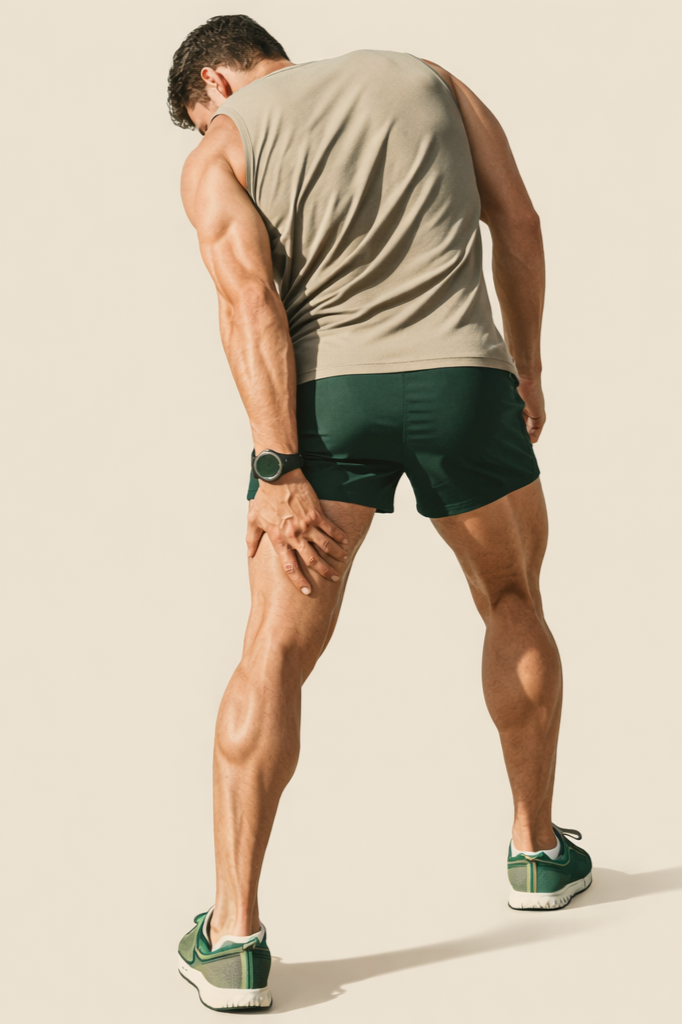
My writing has one core task: translate complex, evolving hamstring research into client‑facing clarity without dumbing it down. I respect my readers’ intelligence. That means:
No salesy promises
No vague “you’ll be fine” platitudes
No impenetrable jargon that only another specialist could decode
I put the effort into keeping up with the science so you don’t have to, and then I explain it in normal language so you can actually use it.
The goal of these articles is simple:
Give athletes and clinicians shared language
Help you arrive at your local clinic with structured questions, not Google panic
Turn consultations into collaborative conversations, not combative “Dr Google vs doctor” debates
Everything I publish is written to align with professional standards and with FTC and privacy expectations: education and decision support, never diagnosis, treatment, or guarantees. Your own medical team always stays in charge of your care.
Each article aims to give a holistic, honest view of proximal hamstring avulsions and ruptures (from decisions to rehab to identity) and, when it makes sense, will point you toward the main research‑based resource I’ve built: the Understanding Proximal Hamstring Avulsion Guide (UPHAG).
UPHAG is my attempt to create the safest, fastest way to inform yourself:
Based on real studies, not generic blog posts and regularly updated as new evidence comes out
Designed to protect you from vague AI answers and non‑specific “hamstring” advice that research has shown can be incomplete or misleading for complex injuries like this (reference)
If these articles do their job, you won’t walk away with a magic answer. You’ll walk away with better questions, clearer language, and a calmer head for the decisions and rehab work that still have to happen with your own team.
I simply believe that serious hamstring injuries live in a grey zone, and athletes deserve structured reasoning, not pressure.

How To Stress-Test Your Hamstring Recovery Plan Before It Fails
You’re being pushed to “just decide” on hamstring surgery while you’re in pain, exhausted, and half‑in shock from the MRI, and a part of you knows this is the worst version of you to make a life‑shaping call. The truth is that most proximal hamstring avulsion decisions are planned choices, not midnight emergencies. This article shows you the difference between a true red‑flag “go now” and the far more common grey zone where you’re allowed to buy time, build a decision day, and choose from clarity instead of panic.
By Dr. Luise “Loopi” Weinrich www.docloopi.com
Medical Disclaimer
Everything here is education and decision support.

Hamstring Rupture / Avulsion Rehab: How To Use Online Support Communities The Right Way
Online communities can help or harm proximal hamstring rupture / avulsion rehab. Learn how to use hamstring injury support groups to reduce isolation, avoid comparison traps, and support your proximal hamstring avulsion recovery and return to sport.
By Dr. Luise “Loopi” Weinrich www.docloopi.com
Medical Disclaimer
Everything here is education and decision support.

Can Rope Skipping Help Your Hamstring Comeback?
Can rope skipping help rehab after a proximal hamstring rupture or avulsion? Learn how fascia, tendons and SSC loading fit into late‑phase rehab and return‑to‑sport after refixation.
By Dr. Luise “Loopi” Weinrich www.docloopi.com
Medical Disclaimer
Everything here is education and decision support.

How To Fix a “Stuck at 70%” Proximal Hamstring Rupture Rehab (And What a Solid 24‑Week Plan Looks Like)
Antifragile rehab guide for proximal hamstring rupture / avulsion. Learn how to design long‑term, phase‑based proximal hamstring avulsion rehabilitation and post‑op refixation recovery so your comeback becomes stronger and more durable instead of repeating the same fragile patterns.
By Dr. Luise “Loopi” Weinrich www.docloopi.com
Medical Disclaimer
Everything here is education and decision support.

Braces, Weight Bearing & Rehab Speed After Proximal Hamstring Repair: What the Evidence Actually Says
There is no single “correct” rehab protocol after proximal hamstring refixation.
You’ll see two broad philosophies:
Conservative / slow protocols
– brace for several weeks
– non‑weight bearing or toe‑touch WB
– running only after 3–4+ months
(example: 6 weeks non‑weight bearing in a brace, then gradual loading)Accelerated / fast‑track protocols
– full weight bearing as tolerated (WBAT) immediately
– no brace
– earlier introduction of closed‑chain load and gait
(example: Aujla et al. 2025; Léger‑St‑Jean 2019)
Both can work. The best protocol for you depends less on what someone online prefers and more on:
how your tendon was fixed (anchor configuration, tissue quality)
how acute vs chronic your case is
your surgeon’s risk tolerance and experience
your ability to follow rules without doing something heroic in week 2

Acute vs Chronic Proximal Hamstring Ruptures: What Actually Changes Over Time?
Most acute proximal avulsions follow a recognisable pattern:
Sprinting at high speed (late swing phase)
High kick, split, slide, or forced “fall into” hip flexion with the knee nearly straight
Water‑skiing, martial arts, dance, football, track – same core mechanics
At tissue level:
The muscle–tendon unit is lengthening (hip into flexion, knee towards extension)
At the same time it is trying to contract eccentrically to brake the leg
Load exceeds tissue tolerance → failure at or near the tendon–bone interface

A calm note on using Google and AI (like ChatGPT) for hamstring information
Proximal hamstring rupture / avulsion rehab guide for serious athletes. Learn how to plan long‑term return to sport after proximal hamstring avulsion or refixation surgery using phase‑based systems, leverage, and compounding instead of rushing back and risking chronic problems.
By Dr. Luise “Loopi” Weinrich www.docloopi.com
Medical Disclaimer
Everything here is education and decision support.

Proximal Hamstring Rupture / Avulsion Rehab: How To Build An Antifragile Comeback Instead Of Rebuilding Fragility
Antifragile rehab guide for proximal hamstring rupture / avulsion. Learn how to design long‑term, phase‑based proximal hamstring avulsion rehabilitation and post‑op refixation recovery so your comeback becomes stronger and more durable instead of repeating the same fragile patterns.
By Dr. Luise “Loopi” Weinrich www.docloopi.com
Medical Disclaimer
Everything here is education and decision support.

Proximal Hamstring Rupture / Avulsion Rehab: Why Patient Athletes Can Win the Long Game
Proximal hamstring rupture / avulsion rehab guide for serious athletes. Learn how to plan return to sport after proximal hamstring avulsion or refixation surgery using long‑term, phase‑based systems instead of rushing back and risking chronic pain or re‑injury.
By Dr. Luise “Loopi” Weinrich www.docloopi.com
Medical Disclaimer
Everything here is education and decision support.

Why Interdisciplinary Work Matters So Much in Proximal Hamstring Ruptures / Avulsions
You’ve been told, “We fixed the tendon, now physio will take care of the rest,” or “You don’t need surgery, just do rehab,” but in reality your surgeon, physio, and coach are all quietly guessing their way through a rare injury they almost never see. Proximal hamstring ruptures/avulsions are structurally complex and clinically uncommon – most physiotherapists will never see a complete avulsion in their entire career – yet we still expect short, overloaded clinic slots to carry the full weight of diagnosis, rehab planning, and return‑to‑sport decisions.
In this article, I walk through why this particular injury almost always needs an interdisciplinary approach: what surgeons can realistically own, what physios can and cannot be expected to know, and how a hamstring‑focused remote layer can give everyone a shared operating system instead of improvising around a “torn hamstring.”
By Dr. Luise “Loopi” Weinrich www.docloopi.com
Medical Disclaimer
Everything here is education and decision support.

Hamstring Tear, Rupture, or Proximal Avulsion? - Why the Wording Matters More Than You Think
You’ve been told you have a “hamstring tear” or “rupture,” but no one can tell you clearly whether it’s a normal muscle strain that settles with rehab or a proximal hamstring avulsion where the tendon has come off the bone. MRI is delayed, different clinicians use different words, and in the back of your mind you’re scared that missing something now could make surgery harder or recovery worse later. In this article, I walk you through the real difference between a strain/tear in the muscle and a proximal tendon avulsion at the sitting bone, why wording and MRI timing matter, what current evidence says about rerupture risk and surgical timing, and how to ask better questions so you and your local team can make a planned decision instead of drifting in “torn hamstring” limbo.
By Dr. Luise “Loopi” Weinrich www.docloopi.com
Medical Disclaimer
Everything here is education and decision support.

How ATL Approaches Proximal Hamstring Rupture / Avulsion Rehab (And Why Mobility Strength Matters)
You’re being told your hamstring is “healed” and that you’re cleared to get back to sport, but your sit bone still nags, deeper positions feel unsafe, and every sprint or cut feels like a risk. A part of you knows this is the worst version of you to pretend nothing happened. The truth is that most proximal hamstring rehabs break down in the middle, not because the tissue can’t heal, but because mobility strength, pelvic control, and whole‑body support were never fully rebuilt. This article shows you why stretching and generic strength are not enough for this injury, what mobility‑strength‑focused rehab actually looks like, and how to move from “I passed the tests” to “I actually trust my leg again.”
By Dr. Luise “Loopi” Weinrich -www.docloopi.com
Medical disclaimer
Everything here is general education and decision support. It does not provide individual medical advice, diagnosis, or treatment, and does not replace care with your own licensed clinicians.

How To Plan Your Return To Sport After A Proximal Hamstring Avulsion / Rupture
Planning your return to sport after a proximal hamstring avulsion or rupture can feel like guesswork, even with a good team. This article explains why the injury is so rare, how to build a realistic rehab and RTS plan with your own clinicians, and when adding hamstring‑specific expertise can help.

The Hamstring Comeback Map: How To See Where You Are And What To Do Next - For athletes with proximal hamstring ruptures/avulsions who feel lost in rehab
You’re leading return‑to‑sport decisions on athletes whose bodies are their careers, yet when a proximal hamstring avulsion walks in, even a strong high‑performance department may only have one or two lifetime cases to draw on. You feel the pressure to “have a plan” while knowing, quietly, that your reps with this specific pattern are low. This article looks at what a realistic RTS pathway for rare hamstring injuries can actually be: how to be honest about experience, how to structure phases and roles, and how to involve focused hamstring expertise without undermining the work of the local team.
By Dr. Luise “Loopi” Weinrich www.docloopi.com
Medical Disclaimer
Everything here is education and decision support.

Proximal Hamstring Rupture: Stop Racing Back and Start Building a Career‑Long Comeback System
You’ve been told you’re “cleared,” you can walk and maybe jog, and everyone around you seems to think the story is over – but you know you’re nowhere near full speed, cutting, or trusting your leg in chaos. The worst part is wondering if this half‑finished feeling is just your new normal. This article shows you why the hardest 20–30% of hamstring recovery almost always happens after discharge, and how to turn that scary gap into a structured performance phase instead of hoping that walking will somehow be enough.
By Dr. Luise “Loopi” Weinrich www.docloopi.com
Medical Disclaimer
Everything here is education and decision support.

Your Hamstring Is Not The Problem. Your Habit System Is. How to rebuild after Proximal Hamstring Ruptures.
Struggle with proximal hamstring avulsion rehab despite “clear” instructions?
Learn how habits, identity, and systems quietly shape hamstring injury recovery - and how to rebuild a realistic, antifragile rehab week with your local team.
By Dr. Luise “Loopi” Weinrich www.docloopi.com
Medical Disclaimer
Everything here is education and decision support.

Work ON the Body, Not IN the Body: A New Operating System for Proximal Hamstring Rupture and Avulsion Recovery
Struggle with proximal hamstring avulsion rehab despite “clear” instructions?
Learn how habits, identity, and systems quietly shape hamstring injury recovery - and how to rebuild a realistic, antifragile rehab week with your local team.
By Dr. Luise “Loopi” Weinrich www.docloopi.com
Medical Disclaimer
Everything here is education and decision support.

6 System Shifts for Proximal Hamstring Avulsion Rehab
Struggle with proximal hamstring avulsion rehab despite “clear” instructions?
Learn how habits, identity, and systems quietly shape hamstring injury recovery - and how to rebuild a realistic, antifragile rehab week with your local team.
By Dr. Luise “Loopi” Weinrich www.docloopi.com
Medical Disclaimer
Everything here is education and decision support.

Telemedicine Second Opinions For Proximal Hamstring Avulsions: Why Modern Athletes Need Them (And How HSCA Fits In)
When you’re stuck between surgery and rehab after a proximal hamstring avulsion, it can feel like one irreversible decision will define everything. In reality, most athletes are navigating a rare injury with partial information, conflicting opinions, and a system that isn’t built for performance-level decisions. This article explains why telemedicine second opinions can help reduce unnecessary uncertainty - not by replacing your local team, but by giving you a clearer framework to understand your MRI, your options, and the grey zone in between.
By Dr. Luise “Loopi” Weinrich www.docloopi.com
Medical Disclaimer
Everything here is education and decision support.

Recovery Intelligence: The 4 Skills Behind A Smart Hamstring Comeback
You’ve been told you’re “cleared,” you can walk and maybe jog, and everyone around you seems to think the story is over – but you know you’re nowhere near full speed, cutting, or trusting your leg in chaos. The worst part is wondering if this half‑finished feeling is just your new normal. This article shows you why the hardest 20–30% of hamstring recovery almost always happens after discharge, and how to turn that scary gap into a structured performance phase instead of hoping that walking will somehow be enough.
By Dr. Luise “Loopi” Weinrich www.docloopi.com
Medical Disclaimer
Everything here is education and decision support.