
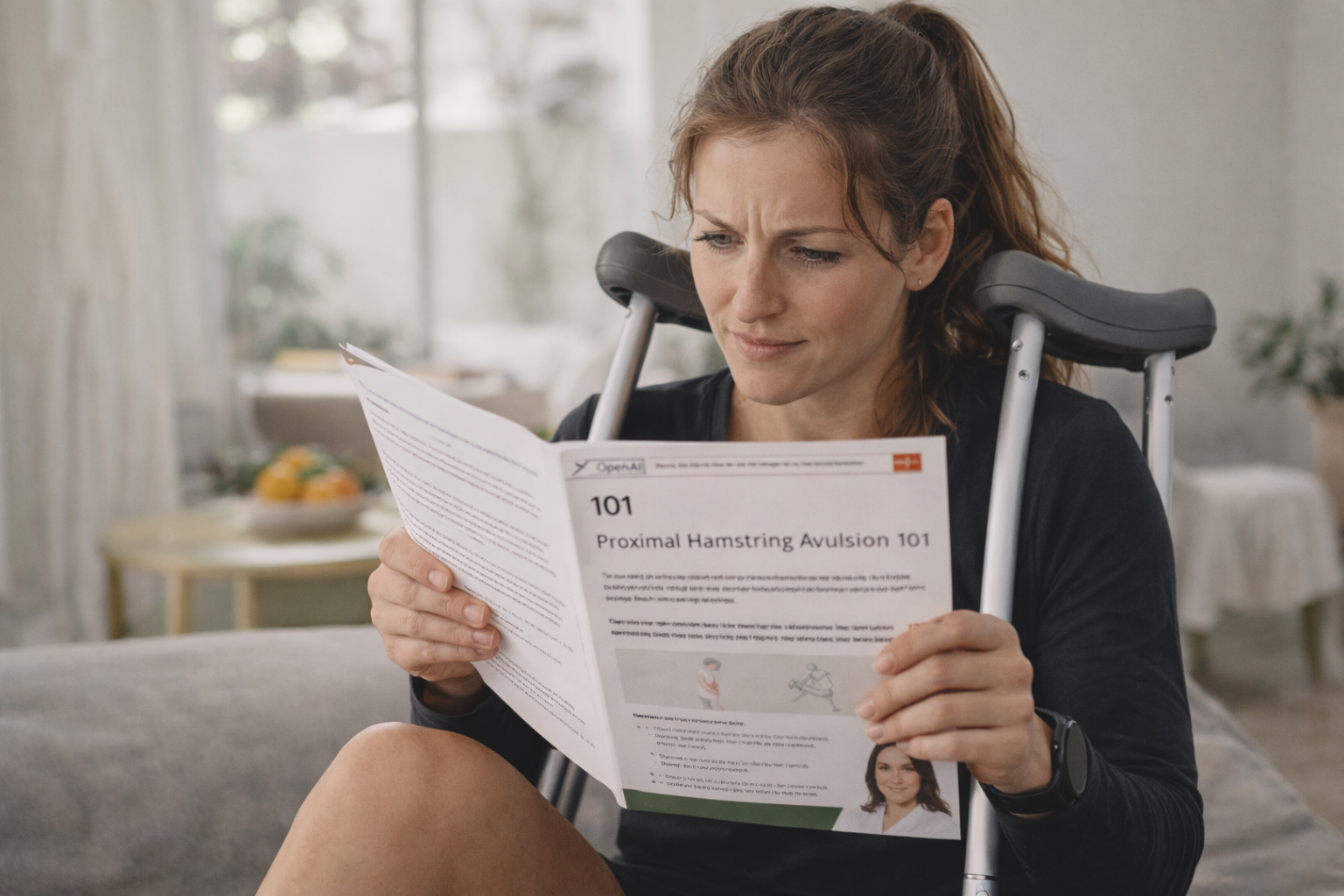
Why and how I write about hamstring ruptures, avulsions, and recovery after surgery
When pain, uncertainty, and big consequences collide, most athletes get chaos, not structure. I see it as my job to provide that structure.

My writing has one core task: translate complex, evolving hamstring research into client‑facing clarity without dumbing it down. I respect my readers’ intelligence. That means:
No salesy promises
No vague “you’ll be fine” platitudes
No impenetrable jargon that only another specialist could decode
I put the effort into keeping up with the science so you don’t have to, and then I explain it in normal language so you can actually use it.
The goal of these articles is simple:
Give athletes and clinicians shared language
Help you arrive at your local clinic with structured questions, not Google panic
Turn consultations into collaborative conversations, not combative “Dr Google vs doctor” debates
Everything I publish is written to align with professional standards and with FTC and privacy expectations: education and decision support, never diagnosis, treatment, or guarantees. Your own medical team always stays in charge of your care.
Each article aims to give a holistic, honest view of proximal hamstring avulsions and ruptures (from decisions to rehab to identity) and, when it makes sense, will point you toward the main research‑based resource I’ve built: the Understanding Proximal Hamstring Avulsion Guide (UPHAG).
UPHAG is my attempt to create the safest, fastest way to inform yourself:
Based on real studies, not generic blog posts and regularly updated as new evidence comes out
Designed to protect you from vague AI answers and non‑specific “hamstring” advice that research has shown can be incomplete or misleading for complex injuries like this (reference)
If these articles do their job, you won’t walk away with a magic answer. You’ll walk away with better questions, clearer language, and a calmer head for the decisions and rehab work that still have to happen with your own team.
I simply believe that serious hamstring injuries live in a grey zone, and athletes deserve structured reasoning, not pressure.