
Stop Guessing Hamstring Rehab:
Own Your Hamstring Recovery
With Confidence
✔ 24‑week, Hamstring Repair Specific Rehab Structure
✔ Orthopaedic physician‑designed
✔ For serious post‑surgery athletes and active people
✔ Phase‑gated training plans
✔ Optional personal Navigator
✔ Rebuild strength, speed, and confidence after proximal hamstring rupture surgery
✔ No guessing, stalling, or re‑starting rehab.
→ Most athletes start with an Orientation Call.
Who This Is For
Serious athletes or active people (competitive amateurs, pros, ex‑pros, people with a sport-identity) with
Proximal hamstring rupture/avulsion
Chosen or already undergone surgery
Who are:
Medically cleared for rehab, but lack sport‑ready roadmap for the next 6 months
Unwilling to stop at, “I can jog again.”
Mentally hit hard by the injury and want structure for body and brain.
It is not the address for “generic hamstring tightness,” random strains, or “I just want to tone my legs.”
Available for a Maximum 3 athletes per month
What people say about OYHR
Core Promise
24 weeks hamstring‑only roadmap:
Removes guesswork and tells you what to do at this Phase, for your surgery
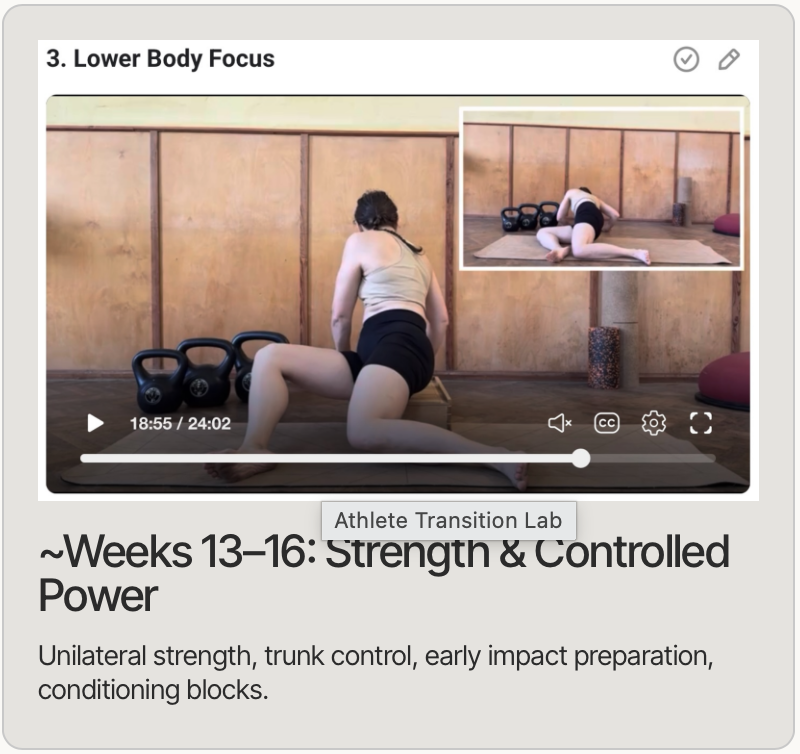
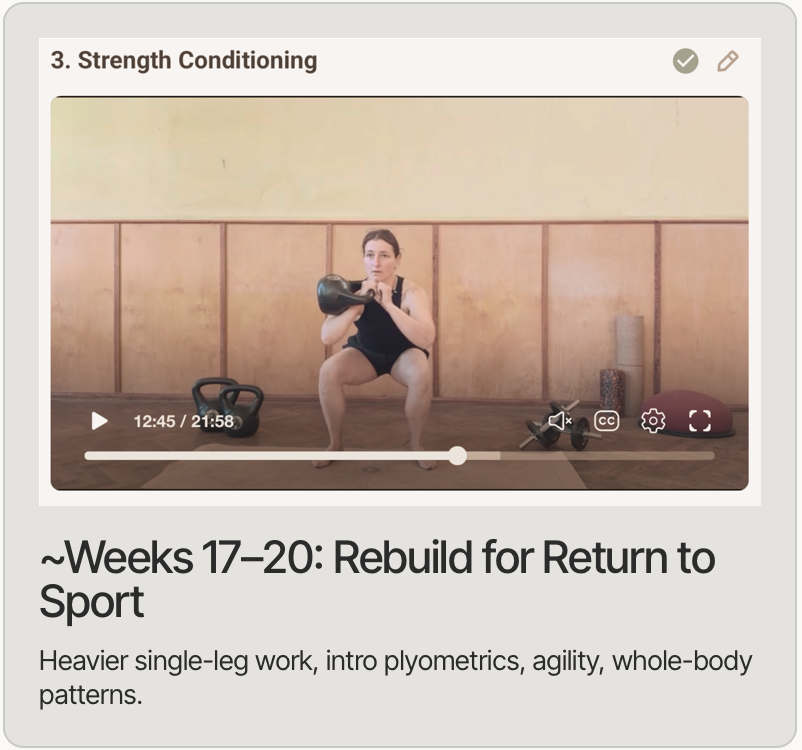
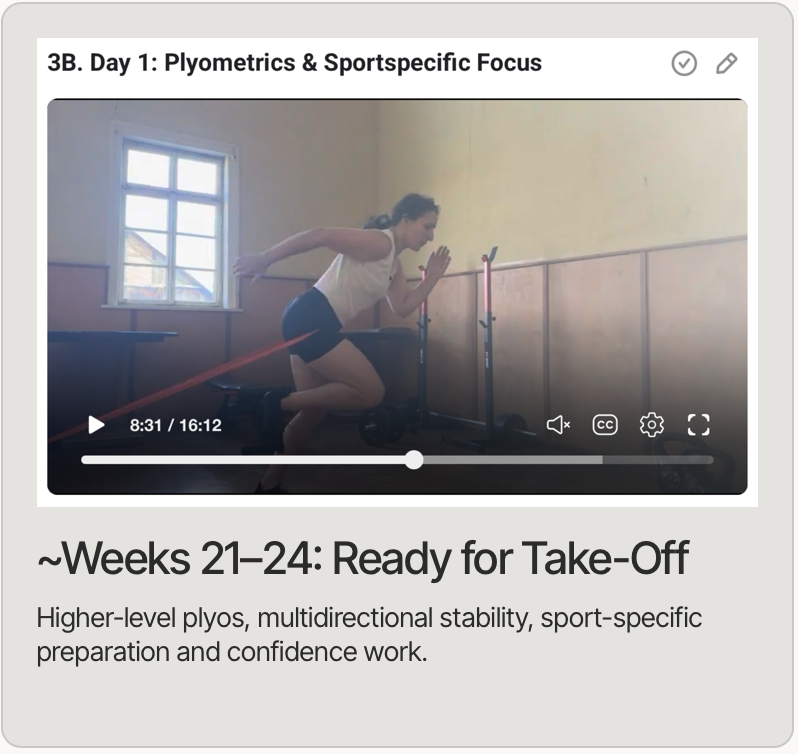
Progresses you from protection → base strength → controlled power → sport prep
Integrates mental resilience so “cleared but scared” is baked into the plan
No promise of an exact return‑to‑sport date.
Promise: you stop guessing, stop yo‑yoing, and finally have a clear, hamstring‑specific system to execute.
What You Get
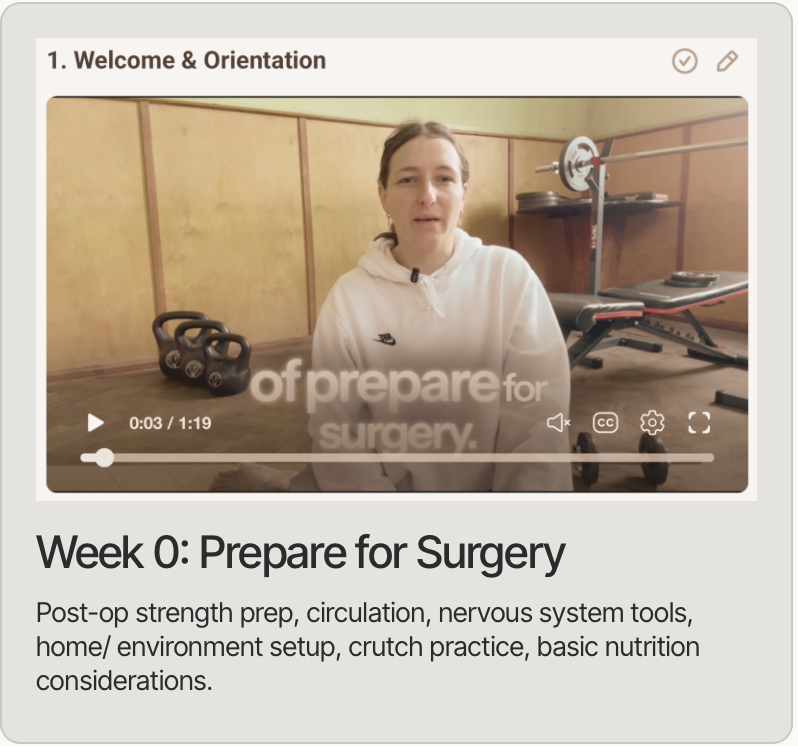
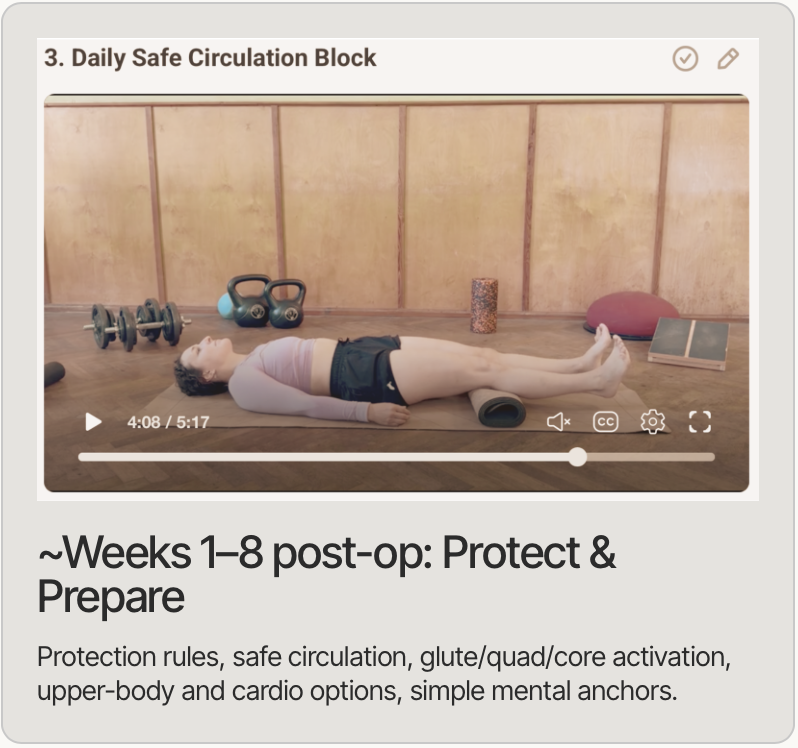
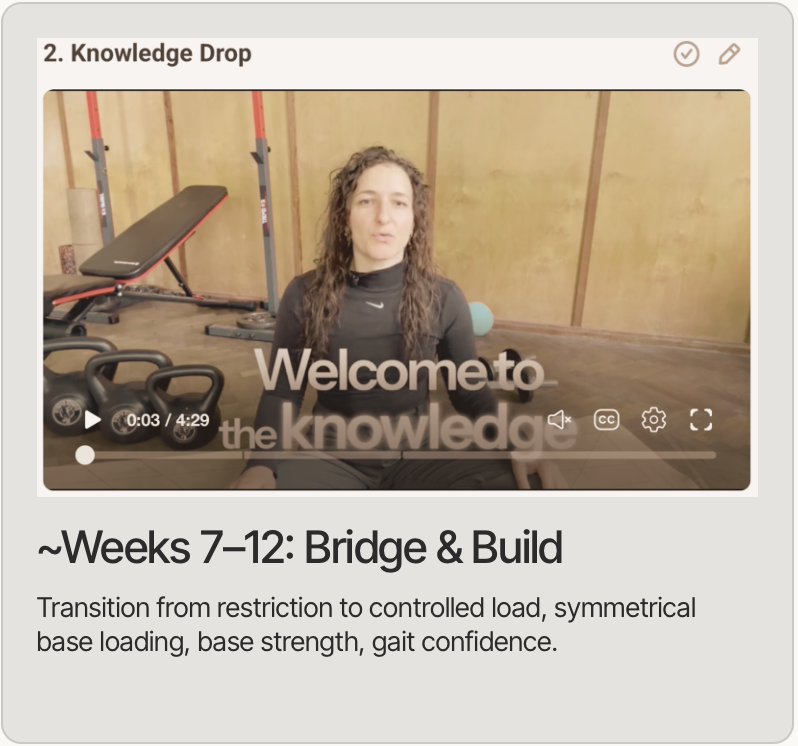
Full 24‑week plan broken into Phases 0–5
For each Phase:
Weekly structure (3–5 sessions)
Exactly which Skool videos and sessions apply
The Checklist-to-Advance
Mental Resilience Toolbox to tackle the mental load
This is the core product: a hamstring‑surgery‑specific, physician‑built roadmap for an entire comeback.

24‑Weeks, Phased, Pre‑Op Prep
Phase‑based, not week‑based. You progress when pain, function and confidence hit simple criteria - not just because the calendar says so.
Optional Add On:
Weekly Progression Check In
Most athletes after hamstring surgery are left to guess: “Is this too much, too little, or just right?”
As add on you can get a weekly, doctor‑validated checkpoint:
You fill one simple line in your personal Weekly Progression Check In sheet each week:
The sheet does the boring math (missed sessions and sleep change) so patterns are clear.
Once per week, your entry gets reviewed and you get a clear feedback
This doesn’t replace your local surgeon or physio. It adds a calm, hamstring‑specific second set of eyes so you’re not silently wondering if you’re doing it wrong. Your effort + a clear structure + weekly doctor oversight = a much higher chance you stay on a safe path instead of yo‑yoing between overdoing and underdoing.
At the same time, this is your personal Habit Tracker, where you can overview your wins, struggles and habitual patterns, so you can check yourself, too.

Mental Resilience Toolbox
Tools you learn and actually use throughout the phases:
Breathing and micro‑reset drills for pain spikes and fear spikes.
Simple “pain = protection” reframes (when appropriate) so you don’t panic at every sensation.
Body analysis tools to notice patterns, not obsess over every rep.
Thought work around “I’m broken / I’ll never be the same” so rehab doesn’t become an identity collapse.
Identity work: shifting from “the injured one” to “the type who rehabs deliberately.”
This is not therapy or mental‑health treatment. It’s practical mental skills to help you stay in the process.
Included Extra Support
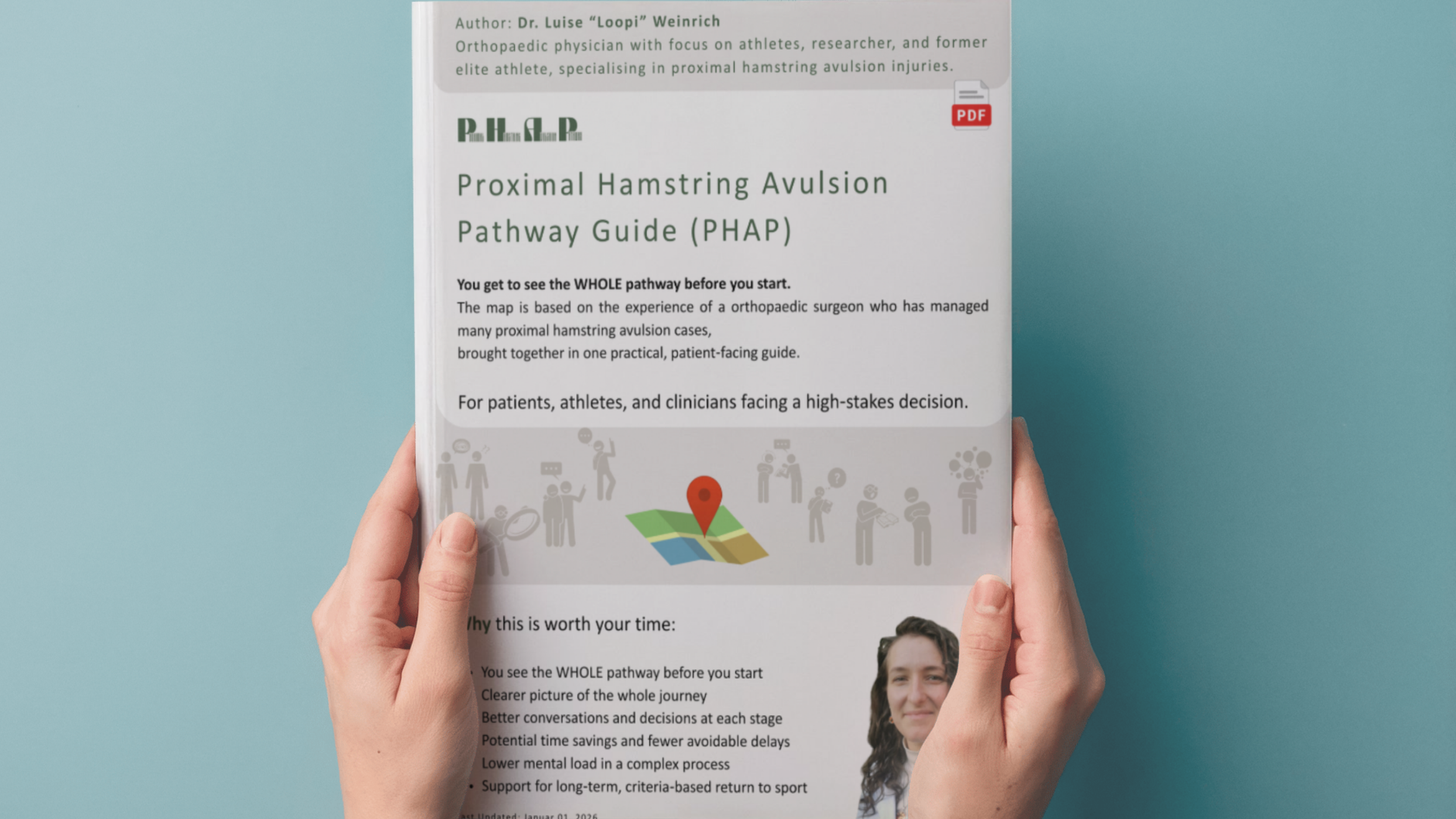
Educational Guides
So you fully understand the injury and decision background you’re rehabbing inside.
Athlete Transition Lab Community access
So you rehab alongside others with the same rare injury, not alone in your head.
Hamstring Surgery Preparation Toolkit
Checklists: what to sort out before surgery (logistics, equipment, appointments).
Stakeholder messaging kit: pre‑written messages for employer, coach, and key people so you don’t have to overthink how to explain what’s happening and what you need.
Home setup guide: how to arrange your space (bed, bathroom, kitchen, stairs) so early post‑op life is simpler and safer.
Partner/family briefing: what to tell supporters so expectations and tasks are clear.
Hospital packing list: what to bring so you’re not scrambling the night before.
What Makes This Recovery Different
Designed by a surgeon Hamstring‑only orthopaedic sports physician (by choice).
Dr. Luise “Loopi” Weinrich is an orthopaedic physician with focus on athletes who spent 7 years in the operating room working on proximal hamstring tendon injuries amongst others.
She completed her specialist training and then made one decision:
”I am leaving hospital work and building my own practice only around serious hamstring ruptures and hamstring surgery recoveries in athletes.”
She doesn’t split her attention across ten different injury types or hospital politics anymore.
Her clinical time, thinking, and online programmes are focused on this one rare, brutal problem: proximal hamstring avulsions in serious athletes.
1. Phase‑gated, not calendar‑guessing.
You move forward only when your body and checklist are ready, so you don’t rush into plyos or sprint prep because of an arbitrary week number.
2. Body + brain.
Each Phase contains physical load plus mental resilience modules built for athletes who are used to pushing, not holding back.
3. Optional Personalized Navigator
The Skool library is the toolbox.
Your Navigator can be the GPS that tells you exactly which tools to use, when, and what to ignore.
How Own Your Hamstring Recovery Works
01
Pre-fit Check
You either:
Had an Orientation Call,
Completed a Hamstring-Surgery Clarity Audit or
Completed a Hamstring Recovery Roadmap Call (HRRC) , or
are absolutely sure OYHR fits your situation, then book directly
Weekly Execution + optional Check In
02
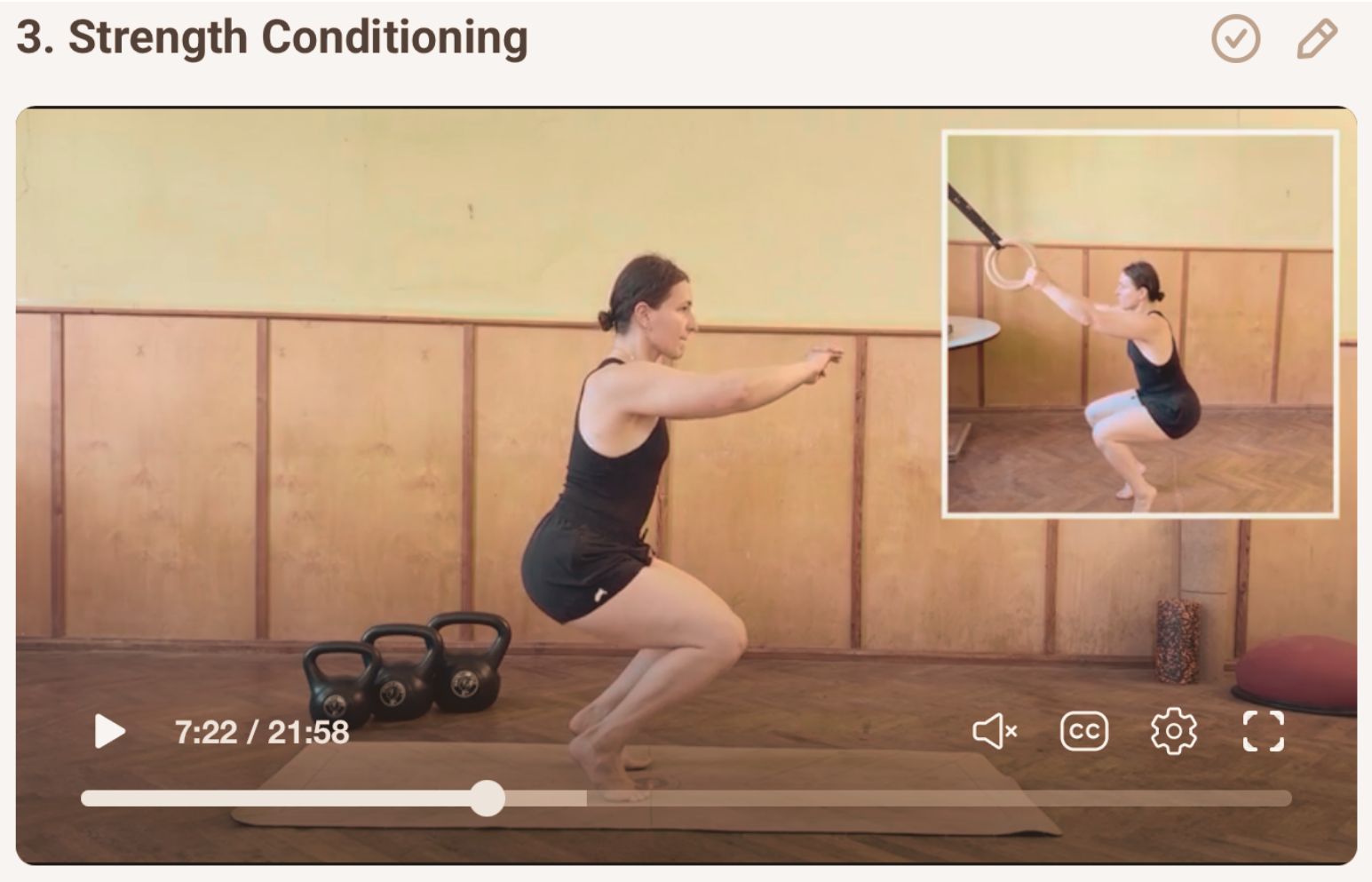
You have full access to the OYHR system (phases, calls, check‑ins) for 24 weeks.
You run 3–6 structured sessions per week (plus optional micro‑blocks on lighter days).
If you are doing the work and medical factors slow you down, access can be extended enough to complete the build phases safely.
Optional: short Weekly Progression Check‑In so we can see what’s actually happening.

03
Completion & Long‑Term Tools
If you complete Phases 1–5 within the container, you unlock lifetime access to:
Phase 5B “Ready for Take‑Off” workouts (advanced plyos, multidirectional stability, sport‑specific prep)
The Mental Resilience Toolbox folder
That way, serious finishers always have a high‑end return‑to‑sport library to come back to, even years later.

Investment
Fee for the full 24‑week program depends on support layers, find out in an Orientation Call.
Fee from a Hamstring Roadmap Call get credited towards the OYHR-Programm only.
You’re getting a structured, hamstring‑specific program, optionally a personal navigator that adapts it to your case, and a Weekly Progression Check In-Tool so you’re not guessing week to week by yourself.
Most serious athletes spend more than this on one season of races, gear, and coaching; this is about protecting the next years of your athletic life, not just the next race.
Optional Add‑On:
Physician Phase‑Safety Calls
For athletes who want Doc Loopi’s brain as a safety net at key decision points.

Typical use cases
After completing a Phase Checklist: “Am I really ready to move on?”
After illness, flare‑up, or life event: “How do I safely adjust this Phase?”
On each call I will:
Review your current Phase
Either clear you to advance or give precise instructions to finish the current Phase
Give feedback on exercises, pain qualities, and mental blocks
Offer practical, situation‑specific tips on physical, psychological, emotional level
Tell you clearly if in‑person medical assessment is the safer choice at this point

24‑Week Execution Guarantee (Conditional)
If you:
Complete at least 80% of the sessions in your Navigator,
Submit at least 20 Weekly Progression Check‑Ins,
Follow the phase rules (no skipping ahead, no adding random hero workouts),
and by the end of 24 weeks you have not progressed at least one full Phase on your checklists from where you started,
then I’ll personally extend your access and update your Navigator for free for up to 8 more weeks, so you have the build phases finished properly.
If you don’t feel OYHR is not the right structure after exploring within the first 5 days, we’ll refund you.
Let’s start!
Click the Button and have a Call to get to know your options!
Effort & Sacrifice
(What You Actually Have To Do)
Your commitment inside OYHR:
Training rhythm:
3–5 structured lower‑body + trunk sessions per week
Plus 1–2 short “micro blocks” (circulation/mobility) on lighter days
Mental tools:
Using the Mental Resilience Toolbox throughout the weeks as needed
Optional Progression Tracking:
Filling out the Weekly Progression Check‑In (5–10 minutes)
One 45‑minute call roughly every 2 months
Non‑negotiables:
Follow the agreed phase guidance (or tell us when you can’t).
Tell the truth in check‑ins so we can fix the plan, not blame the athlete.
The work: show up consistently, be honest, and stay in the system for 24 weeks.
Why This Is Actually Less Effort Than Your Other Options
Without OYHR, the default often looks like:
DIY rehab from Google and mixed advice
→ Constantly designing your own sessions and second‑guessing every exercise.Restarting after every flare‑up
→ Repeating the same 4–8 weeks multiple times because there’s no framework.Living in half‑recovery
→ Training on a leg you don’t fully trust, managing pain, fear, and confusion daily.
Each of those costs more time, energy, and often money than:
3–6 clear sessions per week
…executed consistently for 24 weeks inside a single, coherent system.
Frequently Asked Questions
-
If you complete HSCA or HRRC and decide to join OYHR within 30 days, a portion of your fee (50% of HSCA, 75% of HRRC) is credited toward OYHR. Those products stand on their own; the credit just makes the next step easier if you take it.
-
If surgery is done and “Should I operate?” is settled, you don’t need HSCA. You can book an HRRC or, if you’re sure OYHR fits, join directly and we’ll confirm fit on the onboarding call.
-
OYHR is a structured rehab framework and coaching container built by a doctor who knows this injury deeply, but it does not replace your surgeon, physio, or local care. It does not diagnose, treat, or guarantee outcomes. Your local team remains in charge of your medical decisions.